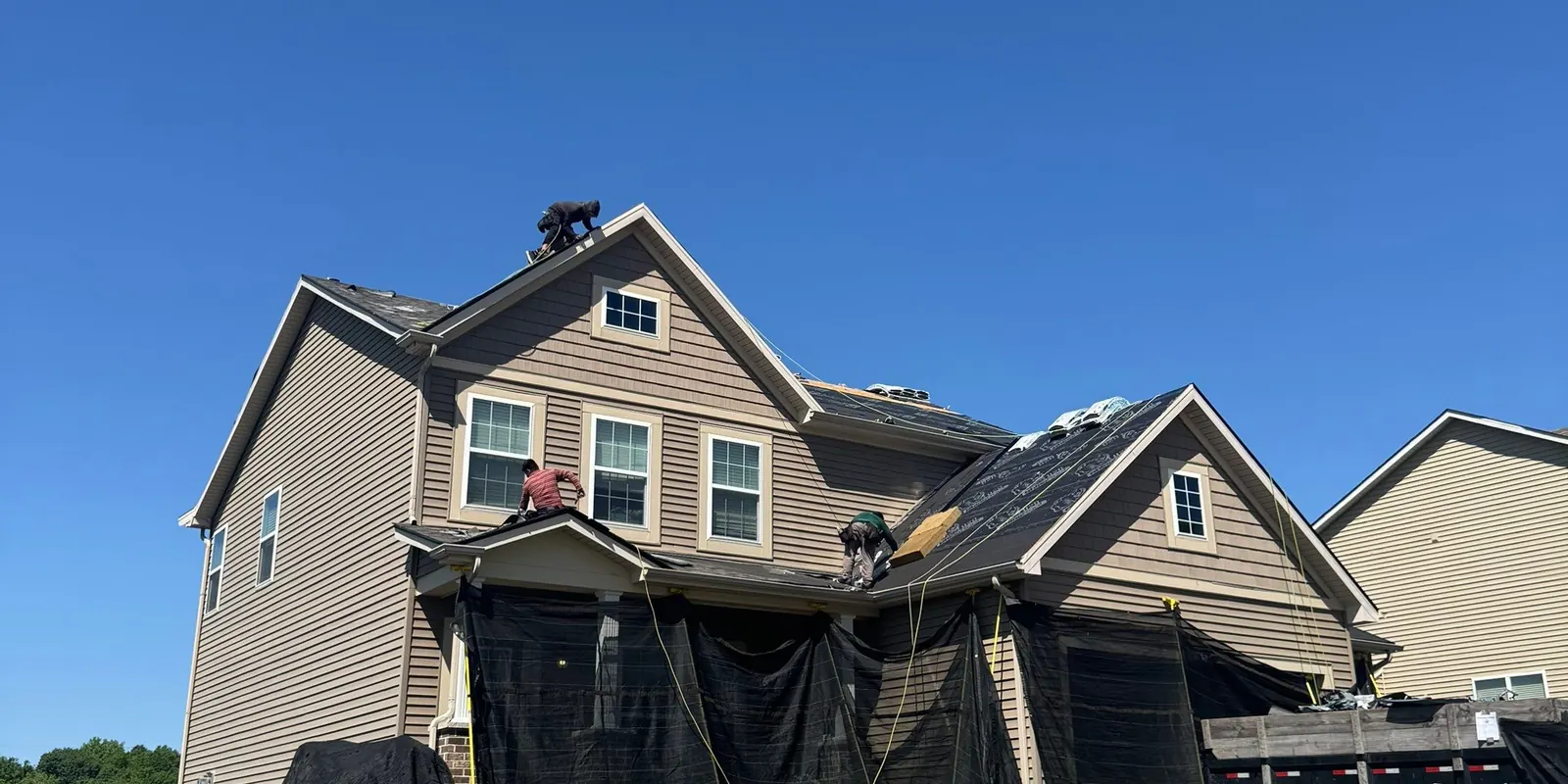
If a Missouri roofer offers to "handle the insurance side" or "deal with the adjuster for you" — that is something a residential exterior contractor is not permitted to do under state law. This page lays out what the law actually says, how a residential property claim actually works, and where the line is between scoping and representing. If you have an open claim, the hail and storm damage scoping page covers the inspection side.
Missouri's Revised Statutes section 407.725 governs residential roofing contractors and insurance claims. The substance, in plain terms:
The intent is clean: keep contractors out of the role of negotiating someone else's policy, because contractor incentives (selling roofs) are not aligned with adjuster incentives (paying claims accurately). Conflating the two roles creates pressure to inflate scope, sign before reading, and absorb deductibles — all behaviors that injure homeowners and carriers alike.
Document the scope of work the home actually needs. Measure the roof slope-by-slope. Photograph damage. Reference the code items, the manufacturer specifications, and the policy language ("pre-loss condition," "compatible materials," "like kind and quality") that drive each line item. Hand that documentation to the homeowner.
The homeowner — who is the only party in this triangle who has the policy and the contractual relationship with the carrier — decides whether and how to share the documentation with the adjuster. The contractor never picks up the phone with the carrier on the homeowner's behalf.
This is what Reliant Exteriors does. The detailed mechanics of an inspection are on the Hail & Storm Damage Scoping page.
Most Missouri homeowner policies pay roof claims in two checks. Understanding which check you're getting matters.
ACV — Actual Cash Value. The depreciated value of the roof at the moment of loss. If your roof is 15 years old and has a 30-year shingle, the carrier may calculate that half its useful life has been spent and pay roughly half the replacement cost. The first check is typically the ACV minus your deductible.
RCV — Replacement Cost Value. What it actually costs to replace the roof today, in current materials and labor.
Recoverable depreciation. The difference between RCV and ACV — the part the carrier withheld. You receive this second check after you have actually completed the replacement work and submitted invoices to the carrier. If you cash the ACV check and don't do the work, the depreciation is not paid out.
This matters because a homeowner who chooses not to replace the roof — or who works with a contractor who can't produce invoices in the format the carrier expects — leaves the depreciation on the table. The amount can be substantial: a $24,000 RCV claim with $9,000 in depreciation means $9,000 only released against documented completed work.
The carrier's scope is the line-item estimate the adjuster builds during inspection. It's typically generated from a template (Xactimate is the dominant tool) and reflects what the adjuster observed during a 30 to 60 minute visit.
The contractor's scope is the line-item estimate built from a full inspection that includes code-required items (ice & water shield in code-required locations, drip edge at every eave and rake, starter strip, balanced ridge ventilation), manufacturer-spec items (kickout flashing, step flashing, color-matched accessories), and any deck damage, decking thickness mismatches, or vent retrofits the original installer skipped.
When the two scopes differ — and they often do, especially on older homes or roofs the original installer cut corners on — the difference is what the industry calls a "supplement." The homeowner submits the contractor scope to the carrier; the carrier evaluates the line items; the carrier may accept some, reject some, or request additional documentation. Each round of back-and-forth happens between the homeowner and the carrier. The contractor stays out of the conversation but stays available to provide additional photos or measurements if the homeowner requests them.
The behaviors that mark a contractor who's about to cause problems for you:
File the claim. Communicate with your adjuster. Review the carrier scope. Decide whether to share Reliant's scope documentation. Sign the final settlement. Receive the payment. Sign the contract for the work. Cash the depreciation check after the work is complete.
Inspect the roof, siding, and exteriors. Document the scope of work the home needs in writing, line-item by line-item, with photos and measurements. Hand the documentation to you. If selected for the work, perform the install to manufacturer spec and provide invoices in the format your carrier expects.
If your claim is complex, has been denied, or has been underpaid in a way you can't resolve directly, your options are to engage a Missouri-licensed public adjuster (who is licensed and bonded specifically to negotiate claims) or a Missouri attorney. Reliant doesn't perform either of those roles and won't try to.
No. Missouri RSMo § 407.725 prohibits a residential exterior contractor from representing or negotiating a homeowner's insurance claim. The homeowner files the claim and is the only party who can negotiate with the carrier. A licensed Missouri public adjuster is the other party who can — but a contractor is not.
ACV (Actual Cash Value) is the depreciated value of the roof at the time of loss. RCV (Replacement Cost Value) is what it actually costs to replace the roof today. Most policies pay ACV first, withhold the depreciation, then release the depreciation (the "recoverable depreciation" check) once you've actually completed the work and submitted invoices. If you don't complete the work, you don't get the depreciation back.
Carrier scopes are written from a quick template-driven inspection. Contractor scopes are written from a full code-grounded measurement of the home. Items like ice & water shield in eaves and valleys, drip edge at every eave and rake, starter strip, and ridge ventilation are required by code or by manufacturer specification. When those items are missing from the carrier scope, a properly documented contractor scope (called a "supplement" in carrier terminology) is what closes the gap.
Door-knocking after a storm, contracts that contain a "contingency" or "assignment of benefits" clause that signs your claim rights over to them, language about waiving your deductible (illegal), claims that they "work directly with your insurance" (prohibited in Missouri), out-of-state license plates, and pressure to sign before getting a second opinion. Any one of these is enough reason to walk away.
Most Missouri homeowner policies allow one year from the date of loss to file a claim, but some are shorter — check your specific policy. The sooner the inspection happens after the storm, the easier it is to document storm-specific damage versus normal wear.
No. Waiving or absorbing a deductible is generally considered insurance fraud in Missouri. Any contractor offering to do this is asking you to commit fraud against your own carrier. A reputable contractor will never make that offer.
If your carrier has denied the claim, your options as the policyholder include requesting a written denial with the specific policy language cited, asking for re-inspection, or engaging a Missouri-licensed public adjuster or attorney. Reliant doesn't advocate on the claim itself, but can re-document the scope as evidence if you decide to pursue it.
Ladder + walk-around. Photo report by email. We document the scope your home actually needs. You stay in the driver's seat with your carrier — that's how Missouri law and your policy both want it.