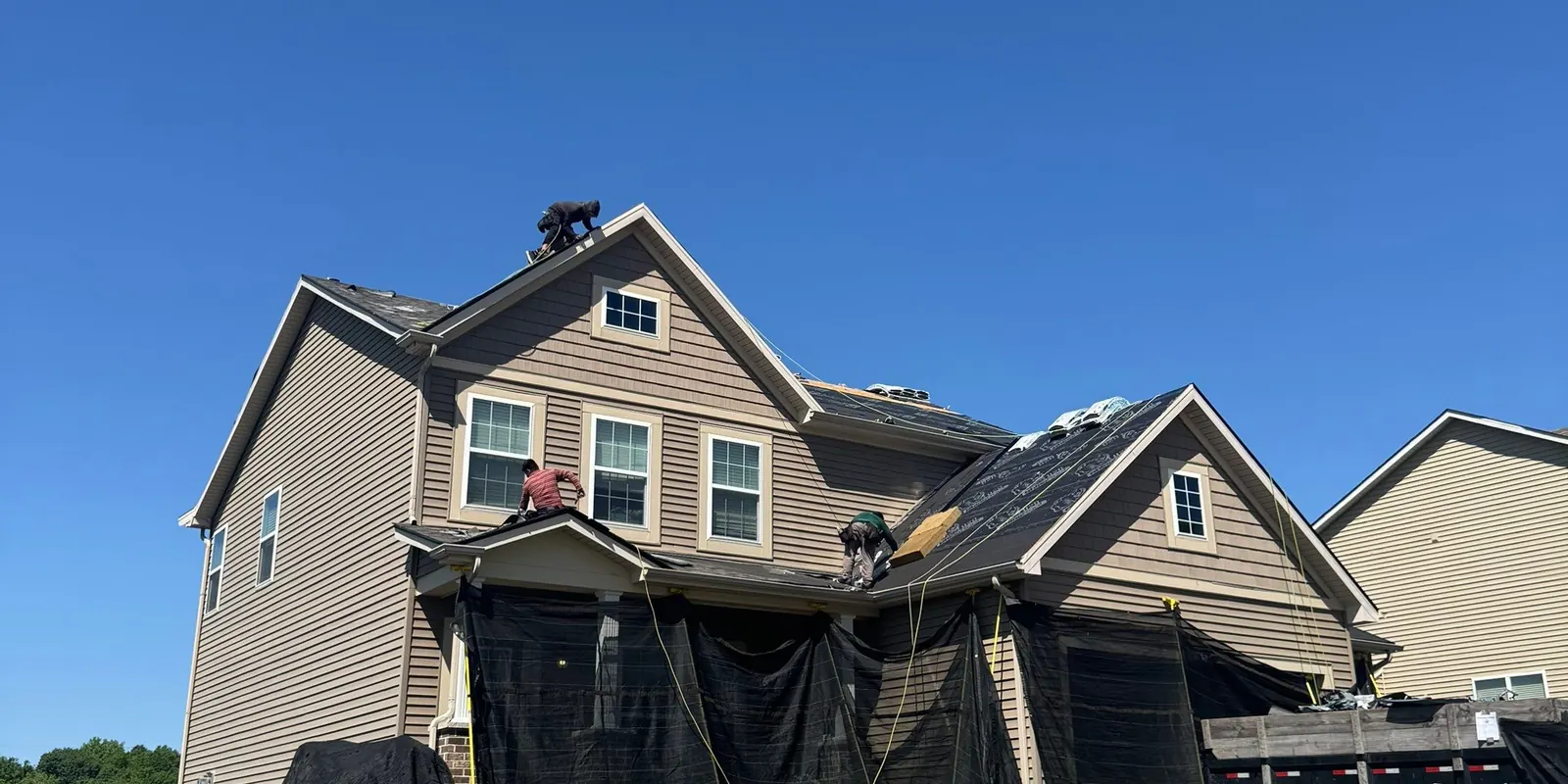
After a hail or wind event, Reliant documents the repair scope your home actually needs — code-required items, compatible materials, full measurements — so your insurance carrier has clean line items to evaluate. Under Missouri law, the homeowner is the only party who can represent or negotiate the claim, and we keep that line clean.
Most St. Louis roofers will tell you they "handle the insurance side." Some go further and describe themselves as supplement specialists or claims experts. Under Missouri RSMo § 407.725, that's not something an exterior contractor is allowed to do. Representing or negotiating a homeowner's insurance claim is the homeowner's job — or a licensed public adjuster's job — not the roofer's. (For the full ACV-vs-RCV-vs-supplement breakdown, see the Missouri roof insurance claims page.)
What a contractor can do — and what Reliant does — is document the scope of work the home actually needs after a storm. That documentation is grounded in three things, all of which the carrier already recognizes:
The line is clean and we keep it clean.
Files the claim with the carrier. Communicates with the adjuster. Reviews the carrier's scope. Decides whether to share Reliant's scope documentation. Signs the final settlement. Receives the payment.
Inspects the roof, siding, and exteriors. Documents the scope of work the home needs in writing, line-item by line-item, with photos and measurements. Hands the documentation to the homeowner. If selected for the work, performs the install to manufacturer spec.
Carrier-supplied scopes are often based on a brief inspection. They miss things — sometimes because the original adjuster didn't get on the roof, sometimes because the code-required items aren't in the carrier's default template, sometimes because partial-repair logic was applied where compatible-materials policy language would point to a full slope.
Documentation closes those gaps. When you sit down with your adjuster, you're not arguing — you're showing them the line items the home actually needs and the standards (code, manufacturer spec, policy language) that drive each one. The conversation goes faster and lands cleaner.
No. Under Missouri law (RSMo § 407.725), an exterior contractor cannot represent or negotiate a homeowner's insurance claim. You file the claim with your carrier. Reliant's job is to document the scope of work the home needs — code items, compatible materials, real measurements — so your carrier has clean line items to evaluate.
Free. We'll come out, document what we see with photos and measurements, and send you a written report. There's no obligation to use Reliant for the repair.
It happens often, especially with code-required items like ice & water shield, drip edge, or starter strip. We document the scope items the home actually needs and provide that documentation to you. Whether and how to share it with the carrier is your call as the policyholder.
Pre-loss condition is the standard most policies use: the home should be restored to the condition it was in before the loss event, using compatible materials and methods. It's the language that drives line items like full-slope shingle replacement when partial repair would result in a non-matching patch.
Most homeowner policies in Missouri allow one year from the date of loss to file a claim, but some are shorter. Check your specific policy. The sooner the inspection happens after a storm, the easier it is to document storm-specific damage.
If your carrier denies the claim, you have options as the policyholder — including requesting written denial language, asking for re-inspection, or engaging a Missouri-licensed public adjuster or attorney. Reliant doesn't advocate on the claim. We can re-document the scope as evidence if you decide to pursue it.
Ladder + walk-around, photo report. Photo report by email. No pressure to use Reliant for the repair.